How to play BANNERBOUND
Three lanes. Ten mana. Six banner towers. A full duel takes about six minutes and this page teaches you every rule you need — with real screenshots from the live game.
1. The goal
Break banners, not faces.
Each player defends three Banner Towers — one per lane, 16 health each. Destroy any two enemy towers and you win instantly. If nobody breaks two towers by the end of the tenth round, the player with the most total tower health left wins. Ties break on total damage dealt.
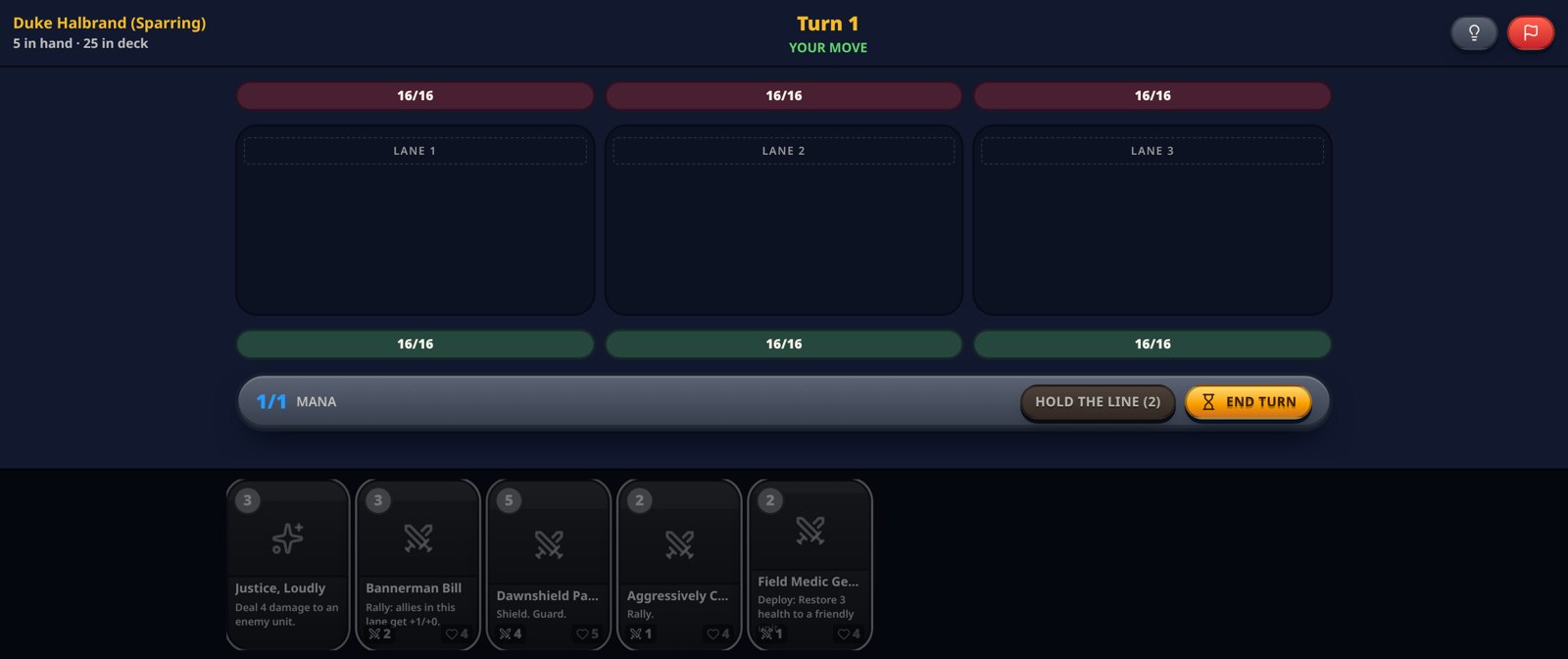
2. A turn, step by step
Draw, spend, position, end.
Draw
You draw one card at the start of your turn. Empty deck means fatigue damage, so games always end.
Gain mana
You start with 1 mana and gain +1 max mana each round up to 10. Unspent mana does not carry over.
Play cards
Tap a card in hand, then tap the lane you want it in. Units, spells and relics all cost mana.
End turn
Combat resolves lane by lane after both sides have acted, then the next round begins.
Combat rule: a unit fights whatever stands directly opposite it in its lane. If the lane in front of it is empty, all of its attack lands on the enemy Banner Tower. Position beats raw stats — a cheap body in the right lane saves more tower health than an expensive one in the wrong lane.
3. Cards and keywords
Units hold ground, spells swing it, relics compound.
Units
Have attack and health, occupy a lane slot and fight every round they survive.
Spells
One-shot effects: damage, healing, buffs, removal or card draw.
Relics
Stay in play and trigger every round. Slow to start, brutal if unanswered.
Guard — Enemies in this lane must attack this unit before anything behind it.
Shield — Ignores the first instance of damage it would take.
Rally — Triggers when the unit is deployed alongside another friendly unit in the lane.
Deploy — A one-off effect that fires the moment the card hits the board.
Last Stand — An effect that fires when the unit dies.
Stealth — Cannot be targeted by spells or effects until it attacks.
Charge — Attacks the turn it is deployed instead of waiting a turn.
Siege — Deals full damage to Banner Towers even through a blocker.
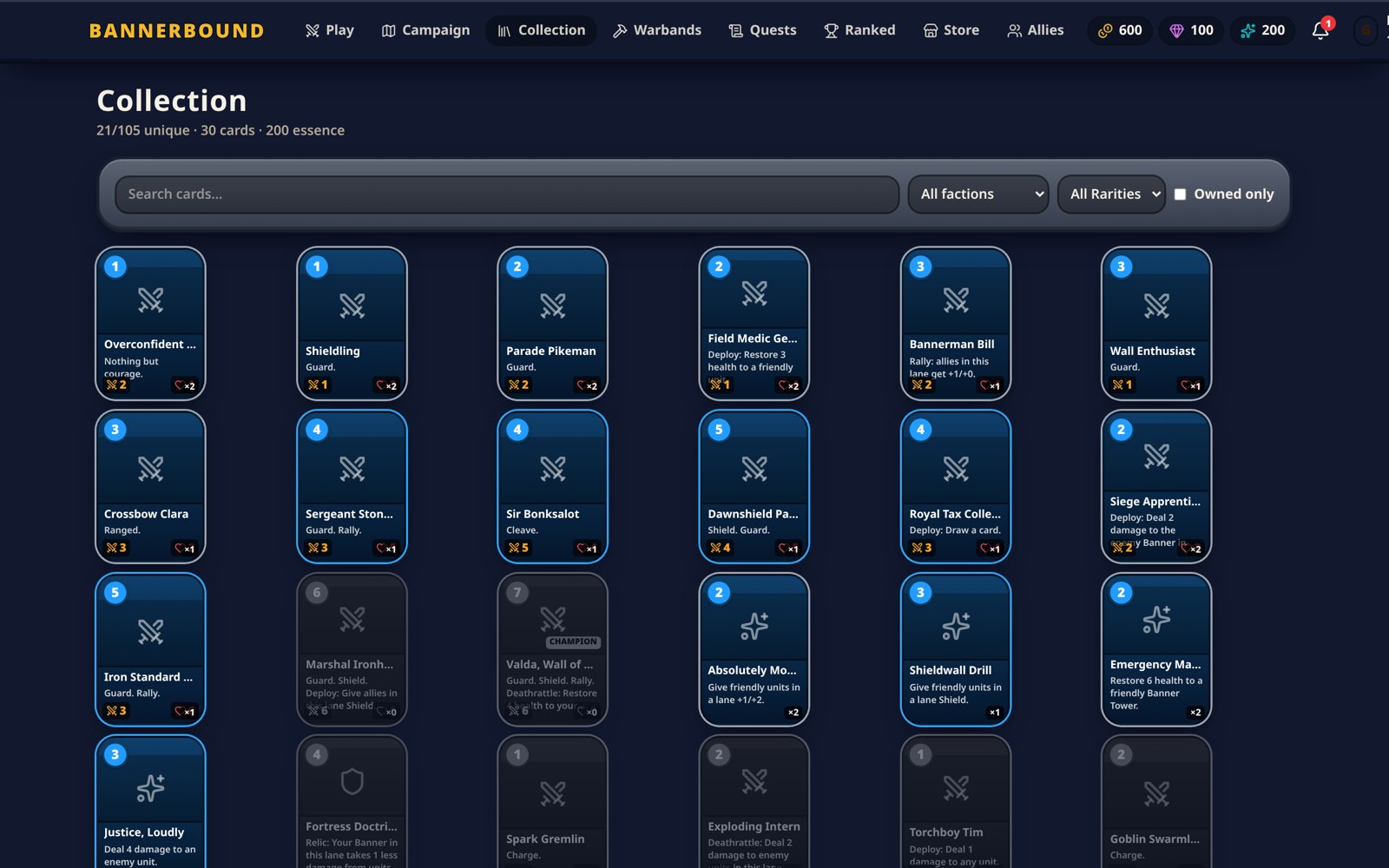
4. Warlords and factions
Your passive is a rule the whole match plays around.
Every warband is led by a Warlord whose passive is always active. Your Warlord also locks your faction: a deck may only use cards from its faction plus neutrals.
Ironclad Legion
Knights, fortress builders and shield bearers who win by refusing to move.
Emberkin
Goblins and fire creatures who solve every problem with an explosion.
Wildbloom
Forest spirits and enormous plants that heal, grow and then flatten you.
Nightveil
Ghosts, thieves and cursed nobles who disrupt, vanish and haunt.
Stormforged
Dwarven engineers and sky pirates chaining relics, draws and lightning.
5. Building a warband
30 cards, hard rules, instant validation.
Deck rules
- Exactly 30 cards.
- Max 2 copies of a card, max 1 copy of a Legendary.
- One faction plus neutral cards only.
- One Warlord per warband.
Curve advice
- Aim for 8–10 cards costing 1–2 so you can contest lanes early.
- Keep at least 4 removal or reach effects for enemy Guards.
- Two or three cards costing 6+ is usually plenty.
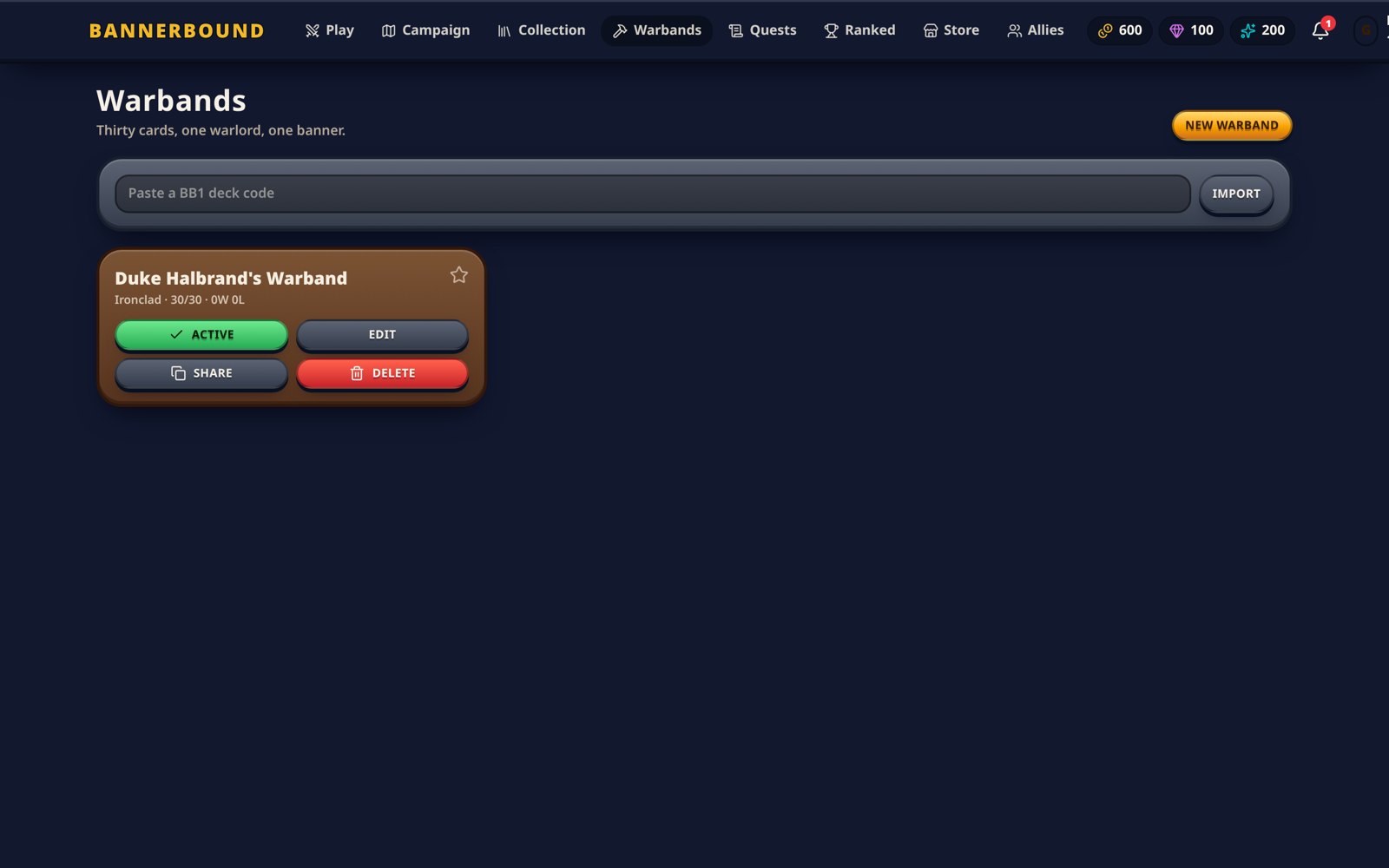
- Share any deck as a BB1 deck code and import a friend's in one paste.
6. Where to play
Campaign to learn, sparring to test, ranked to prove it.
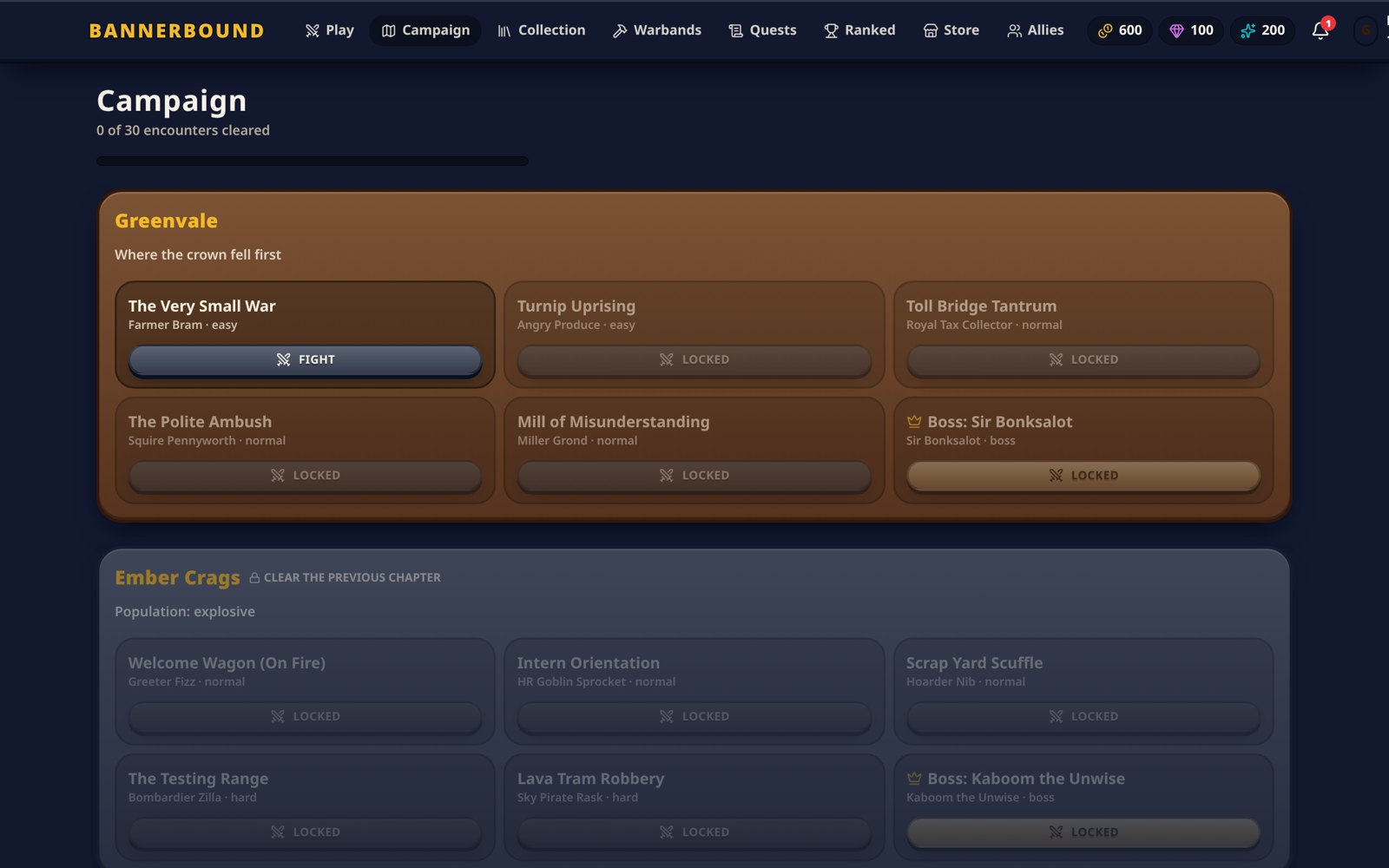
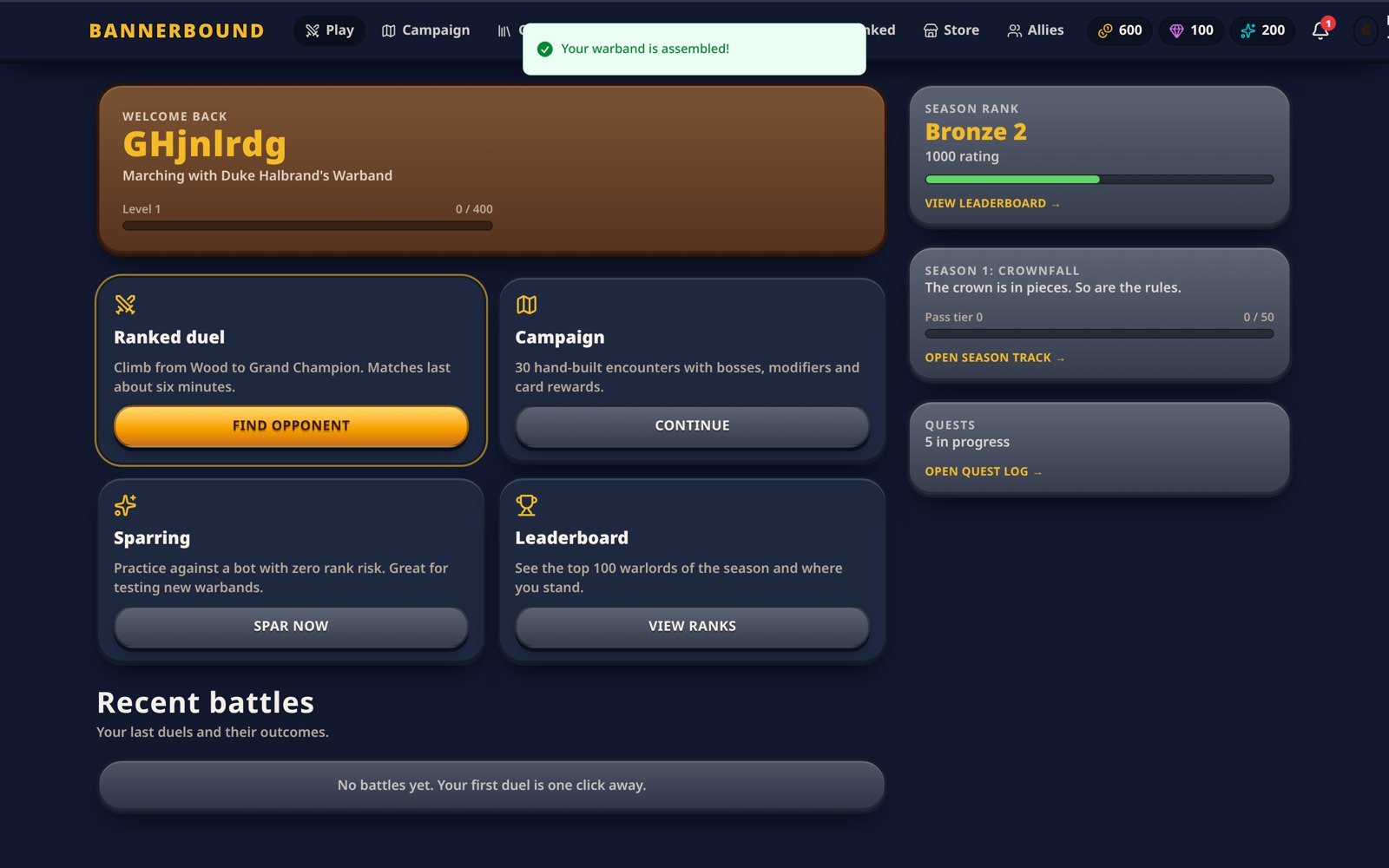
Campaign
30 handcrafted encounters across five chapters, each with modifiers, bosses and card rewards.
Sparring
Practice against bots on four difficulties with zero rank risk. Best place to test a new list.
Ranked
Wood to Grand Champion, matched on rating, with a fresh season track every month.
7. Progression and economy
Everything playable is earnable.
Three currencies
- Gold — earned from matches, quests and campaign nodes. Buys card packs.
- Essence — from duplicates and disenchanting. Crafts any specific card you want.
- Gems — premium currency for cosmetics only: banners, boards, card backs and avatars.
Daily and weekly quests, account levels and the season track all pay out gold, essence and cosmetics. The store never sells power — no card is ever locked behind money.
8. Five habits of good warlords
Read these once, win more tomorrow.
Never spread evenly across all three lanes — concede one lane and win the other two.
Trading a tower's health for board control is fine early; it is fatal after round seven.
Hold removal for Guards and Siege units, not the first two-drop you see.
Count enemy mana before overextending into a board clear.
Check the enemy Warlord's passive on turn one — it tells you their plan.